Welcome to bible-study-online.org!
*
A Seasonal Message — 22 March, 2008
Especially at this time and season of the year, it is right to remember our Lord’s sacrifice at the cross. Recently, I was reviewing some comments made by NT Wright, the Bishop of Durham:
‘He is the wise and loving creator who cannot abide his creation being despoiled. On the cross he drew the full force not only of that despoiling, but of his own proper, judicial, punitive rejection of it, on to himself.’ NTW
‘One of Paul's clearest statements of God executing sentence of condemnation at the cross, as I said before, is found in Romans 8.3, where it is 'sin' itself, as an almost personified force, that is condemned.’ NTW
‘There is 'no condemnation' for those who are in Christ, because on the cross God condemned sin in the flesh of the Son who, as the expression of his own self-giving love, had been sent for that very purpose. 'He did not spare his very own Son, but gave him up for us all.' That's what Good Friday was, and is, all about.’ NTW (The Cross and the Caricatures, 2007)
Here is the question: On the cross, did Jesus draw the full force not only of sin, but of God’s punitive judgment against sin, onto himself? Did God exercise His wrath and punitive judgment against sin on His Son?
In Christian theology, we cannot deny the essentiality of the cross to the condemnation of ‘sin’ and we should remember this aspect of understanding when reading through Paul’s words in Romans 7 and 8. The context demands that we keep the whole of our Lord’s incarnation in mind, even unto His death and His resurrection from death. However, we should also bear in mind that in the flesh of Christ, sin had absolutely no presence or power to quell His righteousness — even though the marks of sin could clearly be seen. The image of His crucified, bruised and battered body personified the sins of man against God.
God condemned sin — as personified in the stricken body of the Son. Sin would have finality. Its effect would have no lasting power over the body of Christ. However, was our Lord’s death the punitive judgment of God against sin? Did God judicially and punitively condemn His Son?
The answer is no. Sin was condemned by God, not Jesus. It was sin that was judged at the cross. It was the death of sin to all who believe in Christ. How? In the Lord’s body, sin has no place or power. As members of His body, we are covered by His righteousness. His righteousness covers all who repent and turn to Him in faith. His grace and forgiveness cleanses us of all sin. In Christ, we have the victory and there is no more condemnation.
His offering — not His punishment — is accepted on our behalf, if we are with Him. If we are forgiven, then our sins have been condemned — they are no more. We are accounted righteous because we stand in our Lord’s righteousness. All who continue in sin, without repentance, continue to be condemned with all their sins.
Sin is either removed by death or through the grace of God. The wrath of God against sin and sinners remains. The final judgment will put an end to all unrighteousness. All who turn to Christ will be saved. The resurrection was the judgment of God upon His Son. He will also raise up all who put there faith in Him: THE LORD OUR RIGHTEOUSNESS!
Especially at this time of year, we should remember His great sacrifice and offering at the cross through which God condemned sin and gave hope of life to the whole world.
In Christ our Lord,
Amen.
*
Discover ...
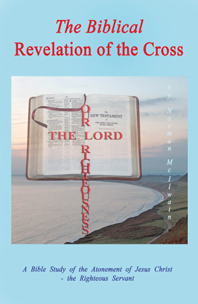
The Biblical
Revelation of the Cross
A Bible Study of the Atonement of Jesus Christ - the Righteous Servant
*******
“Whether your concern is to rediscover a biblical understanding of the atonement or to seek to draw back those who have been driven away from Christianity by the idea of penal substitution, this is one book you cannot afford to miss."
Global Missiology (Jan., 2007 issue, USA)
“The Biblical Revelation of the Cross is not specifically a Lent study book but could be used as such.”
Clem Jackson, Editor, Christian Marketplace (Jan., 2007 issue, UK)
Scroll down to review contents, preface and chapter 1
*******
Now available 'free' to visitors of this website
- apply by email today!:
(private orders only)
Also available direct from:
*******
**
*
Proverbs 17:26, NIV
Sub-headings:
16 ‘The righteousness of God ... through faith in Jesus Christ' (Rom.3:22, NKJ)
Sub-headings:
29 ‘As Moses lifted up the serpent in the wilderness’
(John 3:14, NKJ)
31 The Day of Atonement
37 ‘Barabbas, or Jesus who is called Christ’
(Mat.27:17, NIV)
Sub-headings:
42 ‘Surely he took up our infirmities and carried our sorrows' (Isaiah 53:4, NIV)
45 'The Lord has laid on Him the iniquity of us all' (Isaiah 53:6)
48 'By His knowledge My righteous Servant shall justify many' (Isaiah 53:11, NKJ)
49 ‘He was wounded for our transgressions, He was bruised for our iniquities’ (Isa.53:5, NKJ)
50 'The punishment that brought us peace was upon him, and by his wounds we are healed' (Isaiah 53:5, NIV)
51 'Yet it pleased the Lord to bruise Him; He has put Him to grief' (Isaiah 53:10, NKJ)
52 'When You make His soul an offering for sin ..' (Isaiah 53:10, NKJ)
Sub-headings:
57 'The Lord Jesus on the same night in which He was betrayed took bread ..' (1 Cor.11:23, NKJ)
60 'This cup is the new covenant in my blood; ..' (1 Cor.11:25, NIV)
61 'Do this in remembrance of Me' (1 Cor.11:24, NKJ)
65 'Father, if it is Your will, take this cup away from Me; ...' (Luke 22:42, NKJ)
Sub-headings:
72 'The sin of the Amorites' (Gen.15:16, NIV)
79 'Take now your son, your only son Isaac, whom you love' (Gen.22:2, NKJ)
81 'He Himself is the propitiation for our sins, ...' (1John 2:2, NKJ)
PART TWO
Implications and Applications
85 Chapter 6
Our Personal Response
Sub-headings:
88 ‘Father, forgive them, for they do not know what they do’ (Luke 23:34, NKJ)
91 ‘Is Christ divided?’ (1 Cor.1:13, NKJ)
93 'Sanctify them by Your truth ... that they all may be one' (John 17:17-21, NKJ)
94 'Take, eat: this is My body ...' (Mat.26:26, NKJ)
96 ‘The mystery of godliness’ (1 Tim.3:16, NKJ)
98 Chapter 7
Our Corporate Response and Evangelism
Sub-headings
99 ‘And the Lord added to the church’ (Acts 2:47, NKJ)
102 ‘Look to Me, and be saved, all you ends of the earth!’ (Isaiah 45:22, NKJ)
106 ‘.. sealed with the Holy Spirit of promise’ (Eph.1:13, NKJ)
107 ‘And how shall they hear without a preacher?’ (Rom.10:14, NKJ)
108 ‘Now this is the word which by the gospel was preached to you’ (1 Pet.1:24-25, NKJ)
112 ‘Many are called, but few are chosen’ (Matt.22:14, NKJ)
114 ‘And as many as had been appointed to eternal life believed’ (Acts 13:48, NKJ)
116 ‘But the natural man does not receive the things of the Spirit of God …’ (1 Cor.2:14, NKJ)
117 ‘Thus it is written and thus it was necessary for the Christ to suffer and to rise from the dead ...’ (Luke 24:46, NKJ)
119 ‘… and that repentance and remission of sins should be preached in His name to all nations, beginning at Jerusalem’ (Luke 24:47, NKJ)
122 ‘I saw a new heaven and a new earth, for the first heaven and the first earth had passed away’ (Rev.21:1, NKJ)
125 ‘...according to the revelation of the mystery … now revealed’ (Rom.16:25-27, NIV)
128 Addenda
132 Bibliography
*******
The Biblical Revelation of the Cross @ Oak Wood Publishing House
ISBN 0-9551029-0-1
EAN 9780955102905
Publishing date: 3rd JUNE, 2006
In considering the cross, we can take either a negative or a positive point of view, depending on our doctrinal heritage and interpretation of Scripture. The Bible clearly states these two perspectives: one from the position of the world and the other from the position of God. We can take the view that Jesus at the cross had become the embodiment of sin and all that is morally detestable–as He was viewed by those who killed Him; or, we can take the opposite point of view and see Jesus crucified as He was judged by the One who raised Him from the dead–as the embodiment of righteousness.
Today, most Christians are still adhering to tenets that originated in an age of bigotry, injustice and intolerance. It was a sorrowful time when many church leaders and pillars of reform advocated tyrannical oppression of all who were deemed heretics or religious opponents. Consider, for example, the notorious tortures and executions inflicted by Roman Catholics and Protestants for heresy during periods of religious conflict. The Inquisition of Rome has been well documented; however, the execution by drowning of Baptists in Calvin's Geneva; the list of heresies punishable by death drawn up by the English reformer Cranmer (1550); and, sadly, the anti-Semitism of the much esteemed German reformer of the 16th century Martin Luther, might not be so well known.
Towards the end of his life, Luther released a volley of verbal assaults against the Jews. He preached that the age-long sufferings of the Jews proved God's hatred of them; that they were insolent in their usurious prosperity; that the Jewish ‘Talmud’ sanctioned the deception, murder, robbery and killing of Christians; that they poisoned springs and wells; and that they murdered Christian children to use their blood in Jewish rituals. He advised the Germans to burn down the homes of Jews, to close their synagogues and schools, to confiscate their wealth, to conscript their men and women into forced labour; and wrote, ‘All Jews should be given the choice between either accepting Christ, or having their tongues torn out’ (Concerning the Jews and their lies, 1542). As the renowned historian Will Durant noted (The Age of Faith), such pronouncements set the tone in Germany for hundreds of years–having the height of their fruition during the holocaust.
Much has been swept under the 'Christian' carpet that needs to be revealed. Many of the religious authorities and reformers of those days advocated policies which ran counter to the Gospel of love and true justice. Mercy, so central to the Gospel message, had become overshadowed by a negative understanding of the cross of Christ that saw no place for repentance and forgiveness in the justice of God, only punishment by death for sins. The positive view of ‘Christ crucified’ sees the atonement as God’s provision of righteousness for us through the One who embodied righteousness at the cross. He is the Holy and Righteous One who offered Himself unblemished to God, through the eternal Spirit, as a fragrant offering and sacrifice for the sake of all who truly believe. He ‘submitted Himself to the One who judges righteously’ and not to the justice of man, receiving from God the justice of the resurrection–being raised to heavenly glory. This is the Gospel that needs to be preached.
'The Biblical Revelation of the Cross' is a study of the Bible that explains the Gospel of Christ and the apostles as it was known to the first Christians, relying entirely upon the authority of the Holy Scriptures to present the biblical view–the positive view of the atonement. Keep an open mind, yet be like the Bereans who were praised by the Apostle Paul for zealously checking the Scriptures to see if what he said was true (Acts 17:11).
Norman McIlwain
*******
The Biblical
Revelation of the Cross
A Bible Study of the Atonement of Jesus Christ - the Righteous Servant
PART ONE
'It is not good to punish an innocent man'
Proverbs 17:26, NIV
(Bible study of Jesus' crucifixion: The Law and Justice of God)
'In his humiliation he was deprived of justice,' Acts 8:33. This is what the Bible says happened to Jesus at His trial. He was deprived of justice. Yet, so often, theologians try to explain the crucifixion in terms of God’s justice. Why is this? The Bible nowhere states that Jesus was justly executed. On the contrary, it is the contention of Scripture that He died as the Lamb without blemish and without spot leaving us an example of how to endure when suffering wrongfully (1 Pet.1:19; 2:19-23). Now, the phrase: 'without blemish and without spot' is not a reference to His physical condition, for He was marred more than any man (Isa.52:14), but to Christ’s spiritual condition. To the Ephesians, the Apostle Paul wrote that the offering and sacrifice that Jesus gave to God was 'a sweet-smelling aroma' (Eph.5:2), that is–without any stench of corruption. The Lord Jesus Christ, in both life and death, was spiritually pure and untainted by sin.
So, what is the reasoning that leads so many to believe today that Christ atoned for our sins by suffering the penalty of death according to God’s justice? Basically, it is this:
1. All have sinned and fall short of the glory of God (Rom.3:23). Even newborn infants are born with a sinful nature (Ps.51:5). This is due to the corruption that entered into mankind through sin, as illustrated by the fall of Adam (Rom.5:19).
2. Death is the penalty for sin against God (Rom.6:23). God’s law demands satisfaction.
3. Mankind cannot earn salvation from sin by good works (Gal.2:16).
4. Only by faith in the atoning work of Jesus Christ can we be saved (Acts 4:12; Rom.3:24-26).
5. Jesus died to pay the penalty of death in our place, that we might live (Rom.5:8; John 3:16). Physically, He became a substitute and suffered the punishment that was our due and just reward.
6. On the cross, Jesus took all our sins and guilt upon Himself, becoming legally responsible for all the sins of mankind (2 Cor.5:21; 1 Pet.2:24; Is.53:6-12). Spiritually, He became a substitute; and, as such, God the Father turned away and left Him derelict during the crucifixion (Mat.27:46). He suffered the penalty of separation from God the Father, which is a consequence and penalty of sin.
It sounds convincing, especially when we are led to read certain Bible verses with this view in mind; but we must examine the Scriptures in context and analyze this teaching carefully in the light of God’s Word, to know if it is true. It is possible to have faith in Christ and be in error. Trust can be genuine, but understanding can be flawed. It is possible to come to a belief in Christ as personal Saviour and Lord without a true understanding of the atonement. However, faith that has come through a flawed or false gospel will be limited in power and effect, according to the degree of accepted error. The Lord calls us by various means, but He expects us to overcome our errors as we mature in faith.
Surprising as it may seem, the above interpretation is not the only one given to these verses of Scripture–but it may be the only one you have heard so far. Now is the time to examine the Bible again, from a different point of view. Verses of Scripture never contradict each other. Too often, apparent conflicts are called ’mysteries’, when in fact they are simply problems of understanding that can be clearly resolved when the correct interpretations are applied.
Could God have done that which is not good?
Could God have punished an innocent Man? (Prov.17:26, NIV). If the argument is that God made Jesus guilty for our sins, then we have another problem to reconcile: It is written, 'The soul who sins shall die. The son shall not bear the guilt of the father, nor the father bear the guilt of the son. The righteousness of the righteous shall be upon himself, and the wickedness of the wicked shall be upon himself' (Ez.18:20). The context of Ezekiel chapter 18 makes it clear that God’s justice does not allow for the transference of guilt from one person to another. The responsibility for sin lies with the sinner. Even the conscience and reason testify that justice must be correctly applied and is not simply a matter of exacting a penalty - as though the issuing of the penalty is all that is important, even if it falls upon one who is innocent of the offence. True justice requires that the penalty for a crime be applied to the guilty alone, as it states in the Law: 'Fathers shall not be put to death for their children, nor shall the children be put to death for their fathers; a person shall be put to death for his own sin' (Deut.24v16; cf. 2 Chron. 25v4). In ancient times, it was a practice to also punish close relatives of the guilty for serious crimes. The Lord loathes all injustice. Prov.17:15: 'Acquitting the guilty and condemning the innocent - the LORD detests them both.'
Jesus gave His life for us as a perfect sacrifice, without sin. Yet, in His body He bore our sins - the sins of man. He was bruised, lacerated, torn and pierced. The sins of mankind were plainly visible in His flesh. He also bore the pain of man's sins in His heart. He was burdened by those sins, but He was never the One responsible for them. The sins were the sins of mankind. Justice demands that the guilty must answer for their sins, not the innocent. How then are we set free from the penalty of death? - It is through the offering Christ made of His life. This He gave willingly to God for us - as the perfect offering and covering for sin - sufficient for all who truly believe and repent.
Christ's forsakenness at the time of His trial was physical, not spiritual. The Father removed His protection and permitted His Son to be delivered into the hands of sinful men. God did not resist, but allowed His love to shine forth in the midst of suffering. Jesus gave the sacrifice to God of a sinless perfect life for our sakes. He gave what mankind could not give, because of sin. His offering avails for all who now trust in Him as Saviour and Lord. So what of the penalty of death? Didn't Jesus die for us? - Yes.
In death, He made the perfect offering of His life to God for our salvation. This is why Peter emphasizes the purity of Christ's blood and offering. Christ's gift of Himself had to be without spot and blemish, as symbolized by the Old Testament sacrifices. These were instituted to foreshadow the purity of Christ's own sacrifice. That is why Jesus died - to be an offering, holy and acceptable to God for our sakes. Now, as we put our trust in Him, we are accepted by God along with Him. Jesus did not die to pay (as is supposed) the penalty of death. It was not God's punishment, although He allowed His Son to suffer because of the good that would ensue. The judgment upon Jesus at His trial was the justice of man. The justice of God was the justice of the resurrection, when the Father overturned the verdict of an earthly court and raised Jesus to a position of heavenly glory, giving Him a name that is above every name. It was to 'Him who judges righteously' that Jesus committed Himself (1 Pet.2:23), not to the justice of sinful man.
The meaning of forgiveness
God's law includes forgiveness. The command to forgive others from the heart when they repent, is a command with serious consequences for those who disobey (Mat.6:14-15). True forgiveness entails the removal of all debts and penalties. One is not required to undergo punishment in order to be forgiven. We can clearly see this in the parable of the unforgiving servant (Matt.18:21-35): The servant owed his master a great sum of money and was unable to pay, so he pleaded with his master to have mercy. The master had compassion, released him from punishment and forgave him the debt. The servant then went out and did the opposite. He found a fellow servant who owed him a very much smaller sum. He treated the man unkindly and refused even to listen to his pleas for mercy. He had his fellow servant thrown into prison until the debt could be paid. Notice, when the master forgave, no more was owing. He forgave all the debt (v32). Likewise, when God forgives, the total debt is cancelled and there is no more penalty. It is not that Jesus took our punishment upon Himself that we might be forgiven - forgiveness is not reliant upon the exacting of punishment. Only when there is no forgiveness does a penalty remain. Forgiveness cancels what is owing and removes the penalty for sin. In this context, we could also cite the parable of the 'prodigal son' (Lk.15:11-32): A loving father is pictured as freely forgiving his wasteful repentant son.
God's law allows for repentance and forgiveness. It is not that Christ died to pay the penalty for our sins, forgiveness is not dependent upon the paying of a penalty.
To have all sins forgiven, one must sincerely repent. There needs to be an earnest desire for a change of heart - to bury the old-self to live life anew, in accordance with God's will. Our attitude should be one of godly sorrow for past misdeeds (2 Cor.2:10): 'Godly sorrow produces repentance unto salvation.' Merely asking to be forgiven is not enough. Words are not enough. Sorrow brought on only out of fear of punishment is not enough. One must be sorry for the hurt one has caused others. Also, it is not enough to seek forgiveness if one intends to continue following a life of sin. Even in Old Testament times, sins were not forgiven and sacrifices were not accepted unless there was a genuine attitude of repentance.
The sacrificial animals were required to be without spot or blemish - as a sign of purity, symbolizing the righteous life God demands of us. The blood of these animals was used for the ceremonial cleansing and sanctifying of the people and items used in worship (Ex.24:3-8; Heb.9:19-22). The blood was used to symbolically cover over past sins, 'and without shedding of blood there was no remission' (Heb.9:22). However, without sincere and earnest repentance, the sacrifices were meaningless and unacceptable: 'Bring no more futile sacrifices ... I cannot endure iniquity and the sacred meeting' (Is.1:13, cf.1:10-15). 'Your burnt offerings are not acceptable, nor your sacrifices sweet to Me' (Jer.6:20). What mattered to God was a change of heart: 'Cast away from you all the transgressions which you have committed, and get yourselves a new heart and a new spirit' (Ezek.18:31). The sacrifices, offered as God intended, allowed the people a ritual demonstration of their seriousness before God. The offering of sacrifices acted as an expression of this desire for purity. Nevertheless, sacrifices had to be offered year by year, indicating that the problem of sin remained and could not be dealt with through the Mosaic law. The sacrifices foreshadowed the One who would deliver mankind from sin. - By the one sacrifice of Himself, Jesus has prevailed for our complete forgiveness and justification: 'Because by one sacrifice He has made perfect forever those who are being made holy' (Heb.10:14). - For God's people today, there is a new covenant: '"This is the covenant that I will make with them after those days, says the Lord: I will put My laws into their hearts, and in their minds I will write them," then He adds, "There sins and lawless acts I will remember no more." And where these have been forgiven, there is no longer any sacrifice for sin' (Heb.10:17). Under this new covenant relationship, those with faith in the one sacrifice of Christ are justified, being forgiven all sins and covered by His blood - His life, His righteousness.
Forgiveness is not dependent on the payment of a penalty or debt. With sins, there is condemnation, but with forgiveness, the condemnation for those sins is removed. When we truly repent and seek forgiveness, we are asking God to forgive our past sins. However, the forgiveness of past sins does not deal with our unrighteous spiritual condition - the fact that we will sin again and again, for a whole variety of reasons, sometimes in ignorance, sometimes unintentionally. God demands that we offer Him righteous lives. This is what we owe Him - this is what we cannot give of ourselves, because of our sinfulness. How then can we stand righteous before Him? It is through the righteousness of Christ. His sacrifice avails for all who repent and call upon Jesus as Saviour and Lord.
'The righteousness of God ... through faith in Jesus Christ'
(Rom.3:22, NKJ)
The apostle Paul did not rely upon his own righteousness, but 'that which is through faith in Christ, the righteousness which is from God' (Phil.3:9). As it is written, 'The just shall live by faith' (Rom.1:17). All who believe are 'justified freely by His grace' Rom.3:24. God is 'the justifier of the one who has faith in Jesus' (Rom.3:26). Jesus is a 'propitiation' by His blood, through faith (Rom.3:25). This means that the wrath and condemnation of God because of sin is turned away from those with faith in Christ, who are covered by His life - symbolized by the blood of the Lamb. To those with faith in Christ is attributed His righteousness.
Jesus is the only one who made a pure and perfect sacrifice of His life - when He died for our sakes on the cross. This was the debt He paid on our behalf. It was not the penalty of death, He paid the debt of righteousness - the gift to God of a righteous life, which is our due. Christ's righteousness is our covering if we are united in Him. The Father accepts us along with His Son. He has paid our due offering that we may be covered by His life and judged righteous. 'There is therefore now no condemnation to those who are in Christ Jesus' (Rom.8:1). His righteous life is imputed to us who look to Him and walk in the Spirit in oneness with Christ. It is Jesus who is 'THE LORD OUR RIGHTEOUSNESS' (Jer.23:6). Of ourselves, we can never be righteous. It is only through faith in Christ:
'Just as David also describes the blessedness of the man to whom God imputes righteousness apart from works: "Blessed are those whose lawless deeds are forgiven, and whose sins are covered; blessed is the man to whom the Lord shall not impute sin"' (Rom.4:6-8).
The grace of God covers all who have faith in Christ as personal Saviour and Lord. As we turn to Christ in true repentance for sins, we are not only forgiven our past sins, but we become spiritually renewed through the gift of the Holy Spirit (Acts 2:38-39; Titus 3:5-6). His perfect sacrifice avails for us and we are covered by His righteousness. There is no penalty of death for those who have truly repented with faith in Christ. Forgiveness cancels the penalty for past sins, and Christ's righteousness, imputed through faith, justifies and ensures that there is no more condemnation for sin (Rom.8:1).
Jesus was set forth at the cross to declare the righteousness of God (Rom.3:25 26). God's Son was held aloft as God's righteousness revealed. He is the One of whom Jeremiah prophesied: 'Now this is His name by which He will be called: THE LORD OUR RIGHTEOUSNESS' (Jer.23:6; 33:16). God had said, 'I will raise to David a branch of righteousness' (Jer.23:5). He was set forth as the 'propitiation' (Rom.3:25, Greek: hilasterion - Gk. Septuagint word for the cover over the ark). This word is translated 'atonement cover' in the NIV wherever it is used in the O.T. to describe the covering over the ark, as it is also used in Hebrews 9:5. The word is translated 'mercy seat' in the NKJ version of the Bible. From above this cover, described in detail in Exodus 25:17-22, between the cherubim, Yahweh spoke to Moses: 'Now when Moses went into the tabernacle of meeting to speak with Him, he heard the voice One speaking to him from above the mercy seat that was on the ark of the Testimony, from between the two cherubim; thus He spoke to him' (Num.7:89). This was the cover that was sprinkled with the blood of atonement just once every year, on the Day of Atonement. It was placed in the innermost part of the temple, behind the veil, in the 'holy of holies'. Jesus, therefore, sprinkled with His own blood, is conveyed as the One in whom and by whom propitiation for us is made possible. The cover was placed above the receptacle of the ark of the covenant, which contained the tablets of the moral Law given by God to Moses, Aaron's rod and a golden pot of manna (Heb.9:4). This covenant and the Law of the Ten Commandments is what man has violated. 'All have sinned' (Rom.3:23) - Jew and Gentile alike - 'and fall short of the glory of God.' 'There is none righteous, no, not one' (Rom.3:10). Man's unrighteousness is the cause of his separation from God (Isa.59:2) and the reason for mankind's need of a Saviour - 'Jesus Christ the righteous. And He Himself is the propitiation for our sins, and not for ours only but also for the whole world' (1 John 2:1).
Jesus was the Word of God made flesh (John1v14). He embodied the righteousness of the commandments that were written on the tablets of stone placed within the ark. He was and is the Holy One of God (John 6:69) upon whom God's authority rested and rests, symbolized by the mercy seat. Aaron's rod that budded and bore fruit (Num.17:8), symbolic in one sense of resurrection and new life, placed within the ark, foretold of the Holy One who would say of Himself: 'I am the resurrection and the life' (John 11:25). Jesus is the prophesied Branch of righteousness (Jer.23:5; 33:15), with justice and righteousness as His sceptre (Ps.45:6; Heb.1:8). He is also 'the true bread from heaven,' as Jesus said: 'Moses did not give you the bread from heaven [cf. 'manna', Ex.16:31-33], but My Father gives you the true bread from heaven. For the bread of God is He who comes down from heaven and gives life to the world' (John 6:32-33, NKJ). In a spiritual sense, therefore, the ark of God foreshadowed and typified Christ. When He gave His life as an atonement, His blood poured down over the true Mercy Seat of God's Ark, Himself (Rom.3:25), who embodied the heavenly bread of God's Word and Law, and who was and is the resurrection and the life. He did not do away with the Law, but fulfilled the Law through His own truly righteous life that He poured out in death - thus annulling and bringing to an end the Old Covenant with physical Israel; while, at the same time, ratifying the New Covenant by His blood with spiritual Israel (Rom.7:1-4; Mat.26:28; 2 Cor.3: 4-9). Paul described the spiritual ministry of the New Covenant as the 'ministry of righteousness' (2 Cor.3:9).
The life of Jesus, represented by His blood, was pure and holy. This He poured out for our sakes at the cross. The Father received the sweet-smelling aroma of His Son's offering and sacrifice (Eph.5:2). Now, as we look to Him in faith, His offering is accepted for us and His life covers our own, cleansing us of sin. Through faith in Christ, we are forgiven our past and justified in the present. The NKJ version accurately renders Romans 3:22-26 as follows: 'For there is no difference; for all have sinned and fall short of the glory of God, being justified freely by His grace through the redemption that is in Christ Jesus, whom God set forth to be a propitiation [marg. ref.: mercy seat ] by His blood, through faith, to demonstrate His righteousness, because in His forbearance God passed over the sins previously committed, to demonstrate at the present time His righteousness, that He might be just and the justifier of the one who has faith in Jesus.' The words of Paul speak of justification through faith in the sacrifice of Christ. In the Greek, the passage does not say that Jesus died 'to demonstrate God's justice' (remember: 'He was deprived of justice' [Acts 8:33, NIV]) ; nor does it speak of God's punishment. This passage refers to the setting forth of the propitiation of Jesus to demonstrate God's righteousness: 'His righteousness' as exhibited in Jesus at the cross. Paul went on to say that those with faith in the Son of God are 'justified by His blood' (Rom.5:9) - symbolic of His sacrificial life ('the life is in the blood' [Lev.17:11-14]). There is no suggestion of penal substitution. If Paul had meant this, he could have made it very plain. Rather, Jesus gave Himself as the Lamb without blemish and without spot to God that all with true faith may be accepted with Him, covered by His life in perfect atonement. The 'gift of righteousness' - imputed to all who trust in Him - is the result of this one righteous act (Rom.5:17-18).
The true disciples of Christ are judged, not as sinners, but as righteous. As a way of life, they practise righteous living. They exercise both faith in Christ and a repentant attitude whenever sins occur. For all these reasons, they are deemed just and sin no longer condemns. By the biblical definition, sinners are those who practise sin, without repentance or faith in Christ. The Apostle John said: 'Whoever abides in Him does not sin' (1 Jn.3:6). Now, having stated previously that anyone who claims to be without sin is being untruthful (1 Jn.1:8) and that we must confess our sins, he was obviously not contradicting himself but meaning that we cannot abide in Christ and go on practising sin. With the Bible, we must always seek to understand the context. 'Whoever sins [practises sin] has neither seen Him nor known Him. Little children, let no one deceive you. He who practises righteousness is righteous, just as He is righteous. He who sins is of the devil' (1 Jn.3:6-7, NKJ). Before coming into faith, we were judged as sinners: 'While we were still sinners, Christ died for us' (Rom.5:8). Paul, the apostle, claimed to have been the chief of sinners, because of his pre-conversion persecution of Christians. He certainly did not continue as such.{ The translation of the Greek word eimi, in 1 Tim.1:15 can be misleading, for the same word can be translated either as am, have been or was, cf. Strong's Concordance. It is a matter of interpretation, which should be based upon the context and logical reasoning: 'Christ Jesus came into the world to save sinners, of whom I was chief' - is how it should read. In verse 13 of the passage, Paul had previously stated that he had formerly been 'a blasphemer, a persecutor, and an insolent man. He was not stating here that he still was. Also, for other examples, cf. Gal.1:22; Jn.21:12; 2 Cor.1:18, 8:9: 'was'; Gal.3:21; Acts 4:13: 'had been'; etc and John 9:24: 'the man who was blind.'} Paul taught that, in Christ, we are judged righteous: 'For just as through the disobedience of the one man' - Adam - 'the many were made sinners, so also through the obedience of the one man' - Christ - 'the many will be made righteous' (Rom.5:19).
It may seem humbling for Christians to speak of themselves as sinners, but if you are truly a Christian, then you can't also be a sinner. You are covered by Christ's righteousness and must practise righteousness. Sinners are destined to be destroyed, unless they repent: 'If it is hard for the righteous to be saved, what will become of the ungodly and the sinner?' (1 Pet.4:18).
Not .. '... from a worldly point of view'
2 Cor.5:16
'So from now on we regard no one from a worldly point of view. Though we once regarded Christ in this way, we do so no longer' (2 Cor.5:16). How the world sees us and judges us is different to the way God sees us and judges us. There is a worldly point of view, and there is a godly point of view. In the eyes of God, as true believers, we are righteous because Christ is our righteousness. The world looks upon us differently. In his first letter to the Corinthians, Paul wrote: 'For it seems to me that God has put us apostles on display at the end of a procession, like men condemned to die in the arena. We have been made a spectacle to the whole universe ..' (1 Cor.4:9). Who did this? - God. According to Paul, God had made the apostles to be viewed as foolish and weak: 'the scum of the earth, the refuse of the world' (1 Cor.4:9-13). There is an outward appearance and an inner reality. God allowed the apostles to go hungry and thirsty; to be in rags and brutally treated; to be homeless, cursed, persecuted and slandered. In the eyes of the world, the apostles were worthless scum. Paul said that they had once regarded Christ in this way - from a worldly point of view (2 Cor.5:16). Jesus was treated like a common criminal, spat upon, slandered, verbally and physically abused, mocked, scourged, nailed to a cross and left to die. In the eyes of the world, Jesus was sin. The mob had shouted for His death. He was regarded as one who had blasphemed God and who had worked miracles by the power of Satan (Mat.26:65; 9:34). To the Jews, He was despised as one who had wished to usurp authority and to destroy the law given to Moses. To the Romans, He was a cause of disorder. To the world, the apostles were 'the smell of death' (2 Cor.2:16), but to God 'the aroma of Christ' (2 Cor.2:15). On the cross, 'Christ loved us and gave Himself up for us as a fragrant offering and sacrifice to God' (Eph.5:2). Jesus did this for us. This was how Christ presented Himself to God, but this was not how He appeared to the world.
We must not take a verse of scripture out of context. This verse: 'God made Him who knew no sin to be sin for us, so that in Him we might become the righteousness of God' (2 Cor.5:21), is a verse which must be viewed in the context of the passage, the whole letter, and Paul's related comments in his first letter to the Corinthians and other letters. When we do this, we will not take a worldly view of the cross. In the One whom the world judged as sin we have become the righteousness of God.
Amongst the Corinthians were those who were judging Paul by outward appearance: 'You are looking only on the surface of things' (2 Cor.10:7). Some people were saying that in person he was 'unimpressive' - that his speaking 'amounted to nothing' (2 Cor.10:10), and demanded proof that he was speaking for Christ: 'You are demanding proof that Christ is speaking through me' (2 Cor.13:3). As a way of confirming his calling, Paul chose not so much to speak of the signs of an apostle, which he had wrought amongst them: 'miracles, signs and wonders' (2 Cor.12:12), but of his sufferings in the likeness of Christ (2 Cor.6:4-10; 10:23-29). Paul's concern was not for himself: 'What we are is plain to God' (2 Cor.5:11), but was for those who were forming worldly and divisive judgmental attitudes. Just as we are not to judge Christ by surface appearance, as He was judged by those without faith, so we must not judge each other.
Man had esteemed Christ as one accursed of God (Gal.3:13), smitten and afflicted by Him - but that was only the outward appearance, the view of the world. The Scriptures agree: Christ, 'through the eternal Spirit, offered Himself unblemished to God' (Heb.9:14). Inspired by the Holy Spirit, Stephen, the first Christian martyr, told his accusers that they had murdered the 'Righteous One', predicted by the prophets (Acts 7:52). - The One murdered was righteous. God's vindication of His Son was the resurrection.
'God was pleased to have all His fullness dwell in Him, and through Him to reconcile to Himself all things ... by making peace through His blood, shed on the cross' (Col.1:19-20). Paul said: 'God was in Christ reconciling the world to Himself, (2 Cor.5:19, NKJ). How were we reconciled to God? : 'We were reconciled to God through the death of His Son' (Rom.5:10). Therefore, we can conclude, God was in Christ reconciling the world to Himself through the death of His Son - who offered Himself unblemished to God, through the eternal Spirit, as a fragrant offering and sacrifice. - This is biblical and reveals that there was no spiritual separation of the Father and the Son at the time of the atonement.
In reality, far from being the embodiment of sin upon the cross, the Scriptures declare that He died righteous, unblemished by sin and at one with God.
'For He made Him who knew no sin to be sin for us ..'
2 Cor.5:21
An alternative reading of 2 Cor.5:21 renders the word for sin, Gk.: hamartian